
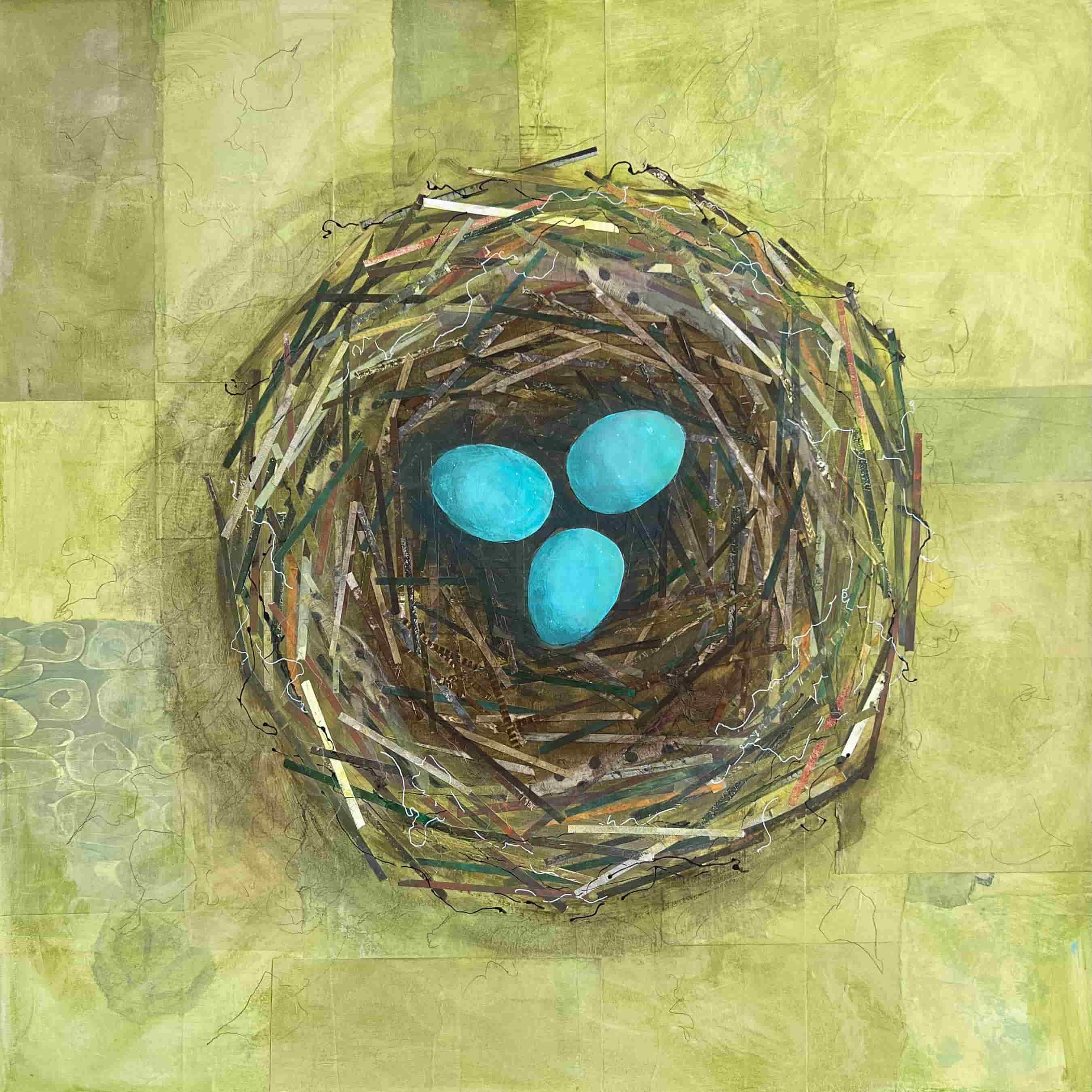
©Pamela Hirsch, The Nest, Collage, found paper, painted paper, acrylic paint, string, ribbon, 24×24 inches
“Important art” is one of those art-world phrases that sounds neutral, but isn’t. It’s easy to accept at face value—until you notice how quietly it can shape what artists think they’re allowed to make.
When I hear it, I don’t think “great work.” I think: endorsed work—specifically, by the people who get to define importance. And that’s where my resistance starts. (Which is a polite way of saying it makes me angry.)
The moving-target trap
To start with, the definition of “important” changes with trends and institutional priorities.
The problem with “important” is that it’s not a standard — it’s a weather system. It changes with taste, institutional politics, funding realities, and whatever conversation is hottest right now. So if you’re trying to make “important” work to be seen (or worse yet, validated) you can end up over time making work that’s shaped to fit the moment instead of what’s important to you.
Take Damien Hirst, for example: still famous, but the art world’s relationship to him has changed. The “importance” that once meant shock + conceptual packaging + institutional visibility now reads to many people as brand mechanics. The weather shifted.
“Important” is a power word, not a quality
“Important” often means endorsed by gatekeepers.
Who are these gatekeepers? Well, there are a number of them.
Museum curators and directors - having your art acquired by a museum says that it matters historically, and is therefore important.
Major commercial galleries - they control pricing, introductions to curators and critics, and placement with collectors (sales)
Critics and writers - they shape the story of your work, and they decide which artists gets covered.
And that’s not the full list.
Collectors can be gatekeepers, especially those who are influential and have a lot of visibility. Also, art fairs and exhibitions. A recent article in Hyperallergic from Damien Davis examines the issues and morality of having to pay just to be considered for a place in an exhibition. The costs for an emerging artist can be staggering.
The problem is that it disguises power—in the form of “importance”—as merit.
Moralization + virtue signaling
Art has always dealt with morality. What feels new is moral alignment becoming a shortcut for artistic value—like the work is “important” because it signals the right stance.
My work isn’t political, and I’m not against political or ethical art. But I am against the idea that art becomes more valuable when it functions like a badge.
I’m not trying to define what “important” should mean for everyone. I’m just trying to name the trap: when importance becomes something granted by a system, artists can start making work for the system instead of for the work. I’d rather chase honesty. I’d rather chase the studio moment when something feels true—whether it ever gets stamped as “important” or not.