
The Spark
Years ago, I made a watercolor painting of a robin's nest with a couple of eggs in it for my sister. I had started calling her the “robin whisperer” because every year robins nested outside her bedroom window.
That little watercolor became a kind of marker for me—one of the first times I trusted myself to make art again after retiring.
I've always had a thing about bird's nests. There’s something so delicate yet strong about them and something that belies a certain trust. I love how ingenious birds are at building homes for their young.
So I decided to make a larger piece this time around. It's called The Nest and is on a 24x24-inch stretched canvas.
What to Notice
The first place my eyes go to are those three bright blue eggs. I really wanted them to stand out. The rest of the piece is pretty quiet.
I'll talk more about how I made the background in the next section, but I wanted it to look as though the trees' leaves had melded into one amorphous green shape filled with light, as though it was breathing.
There's a lot of movement and rhythm in the nest itself with all the overlaid pieces of painted paper and ribbon and string. But that movement doesn't extend out to the edges of the painting. It's all there inside the nest holding those three blue eggs - safe and sound.
How It Was Made
The collage was created using hand painted paper, found papers (most of them from old books), acrylic paint, colored pencils, ribbon cut from Indian sari fabric, wrapping ribbon and twine.
The first layer was made up of pages from an old engineering textbook. They were glued down with polyacrylic and I wrapped the edges with them as well. I was struck by how tight the canvas got after the glue dried. It’s as tight as a drum, which I love.
Then I put a second layer of paper on using old book pages, primarily ones that didn't have writing on them. There are some other neutral-painted papers in there as well. After that dried, I applied a thin glaze of a woody green acrylic paint and wiped it back to get that soft green background.
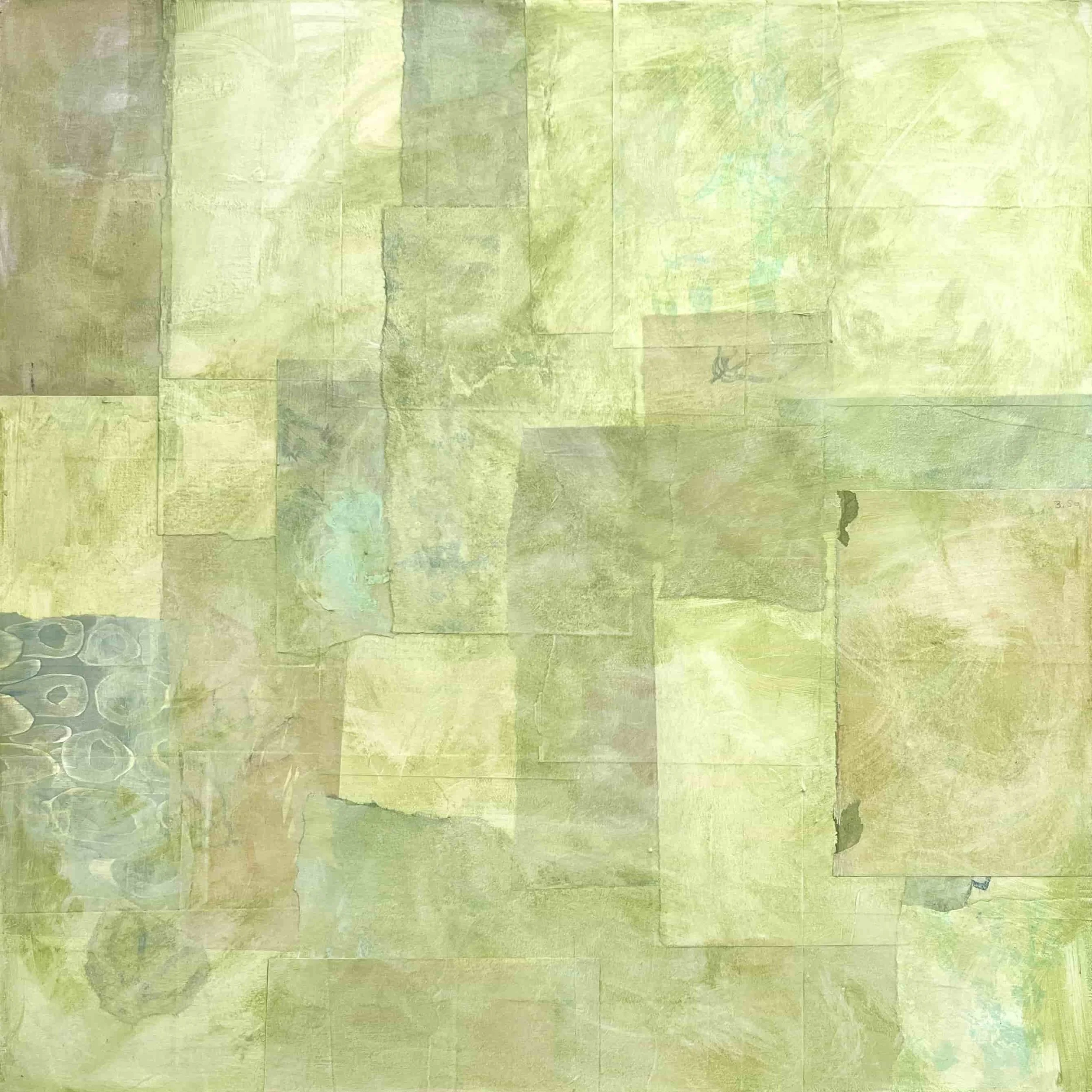
The completed background
Once I got the background done, I started building the nest. I made a bunch of papers using the gelli plate and acrylic paint that were in dark and medium-toned neutral shades.
These were then hand-cut into very thin strips of about an eighth of an inch in width. At one point, I considered using a paper shredder to do the cutting, but not only did it shred the pager into thin strips, it cut them up into very small pieces which wasn't what I wanted. So much for that time saver!
Each strip was placed and glued down individually, just like a bird might do with each twig or piece of grass it collected. When I was researching bird nests, one of the things I found out that was very interesting is that birds now are using more and more what we might consider trash in their nests: bits of wire, bits of string, bits of plastic bag, whatever it can find.
With that in mind, I used some twine that I unwound as well as some fabric ribbon to make this nest.
The eggs were made next from painted paper and glued in place. I then went in with some very thin acrylic paint to darken the nest behind the eggs and create depth.
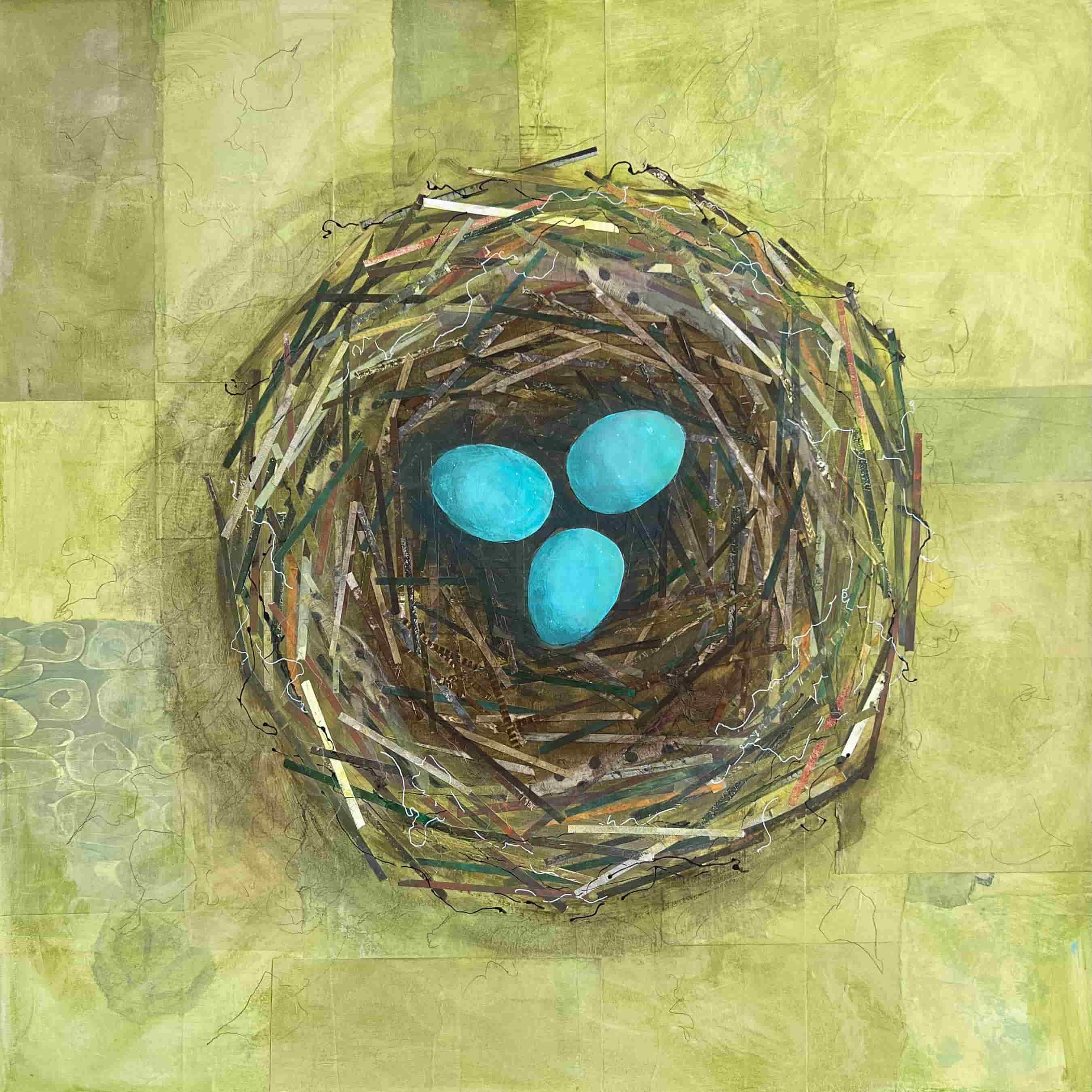
©Pamela Hirsch, The Nest, Acrylic, paper, string, ribbon, colored pencil, 24×24 inches
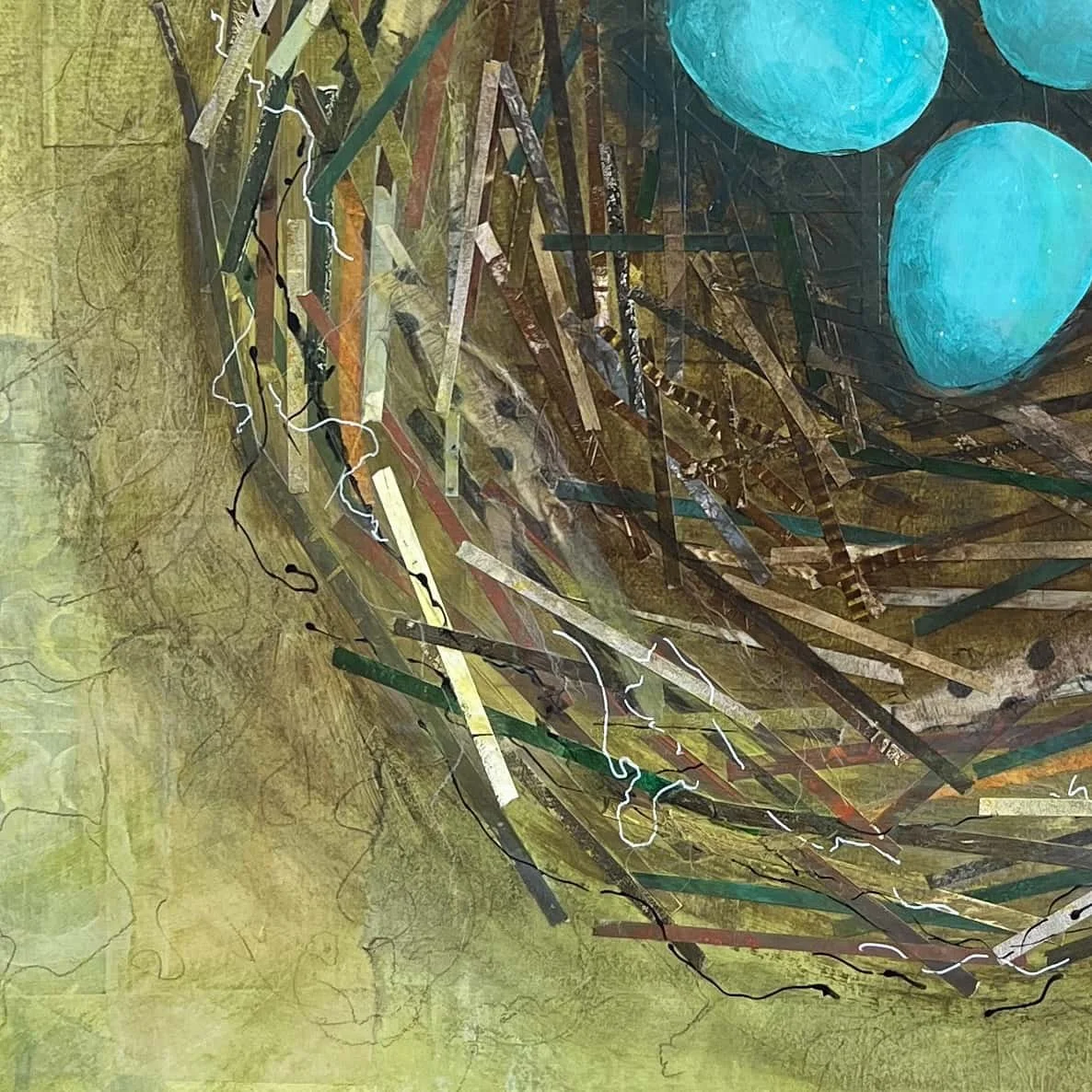
Here’s an image of some of the detail
The Story Underneath
Nests clearly represent the idea of home and safety - homes that we make ourselves from things that are important to us.
When I moved into my new house two years ago, I thought a lot about how I could make it feel like me. I’d been following interior designer, Rita Konig, and had the opportunity to ask her how I could make my Florida home feel more like an English country house.
She said it wasn't so much about the style of the furniture and the colors on the wall. It was all about the small details, such as the things I'd collected over the years and how I displayed them, how I chose to give them importance. Those are the things that are so delightful about an English country house - those quirky bits.
Maybe I'm giving birds more credit than they deserve, but I like to think that they somehow know which pieces of vegetation and bits of flotsam are going to create the perfect place to raise their chicks.
How It Lives in a Home
This collage could live anywhere in your home. It would be perfect in the entryway over a console table. I could see it at the top of a stair landing, in an office or even in a child's bedroom.
Even though there is a lot of green in this piece, the green is soft and muted. It would work well positioned near baskets and indoor plants, anything that says “nature.”
Scale + Presence
The Nest is a medium-sized piece that holds its own. Because the sides of the canvas have been wrapped with collage paper and painted in that misty green, it doesn't need to be framed. But it would look very well in a natural-colored floater frame.
This piece would also look great on a gallery wall with other smaller nature-themed paintings.
The Nest is available—details are here.